
Formula 1 is the pinnacle of motorsport. With pioneering designs and state-of-the-art technology, is it any surprise that F1 technology has found its way into the production of everyday road cars?
From aerodynamics to paddle shifters, we’ll explore nine times when F1 technology seamlessly transitioned into everyday vehicles. We’ll also touch upon the future of new car technology.
Lights out and away we go…
- Active Aerodynamics

In today’s Formula 1 cars, there’s a movable flap on the rear wings that allows the driver to decrease aerodynamic resistance. Referred to as DRS, or drag-reduction system, this technology has now made its way into numerous road vehicles, spanning from the every day to the high-performance.
For example, Ferrari’s powerhouse, the SF90 uses a twin-part rear wing as an application of the drag reduction system. On the other hand, cars like the Ford Mustang, BMW M5, and even older Chevy Cruze sedans leverage similar F1 technology.
In these cars, active grille shutters engage at specific speeds to minimise drag and enhance fuel efficiency at higher velocities, while the shutters open again to improve engine cooling when the speed decreases.
- Hot V Engines

Ferrari pioneered the Hot V engine design in the 1980s, a recent supercar technology that has since undergone extensive testing in high-performance cars like the Mercedes-AMG GT S and the Porsche Panamera.
In contrast to standard engine configurations, the Hot V engine features ports that direct inward, converging toward the block’s centre line, with the turbocharger situated in the middle. This F1 engine technology is intriguing but not without its challenges – the engine layout is exceptionally intricate and is best suited for high-end supercars (think Lamborghini and Ferrari).
- Carbon Fibre

In 1981, McLaren made history by introducing the first-ever carbon fibre chassis in Formula 1 with its MP4/1 chassis.
Although F1 technology used carbon fibre for its lightweight and robust properties in smaller components prior to this, McLaren took a significant leap forward by applying it on a larger scale.
This groundbreaking advancement paved the way for the creation of the world’s initial series production road car featuring a carbon fibre chassis, exemplified by the Mercedes-Benz SLR McLaren.
Today, carbon fibre is a prominent material in various premium road car brands such as Rolls Royce, Bentley and Aston Martin. In fact, the Jaguar XE SV Project 8 used carbon fibre body panels to offset weight from its bigger, heavier engine.
- Active Suspension

Active suspension is one of the most prominent F1 technologies that’s now commonplace in mainstream vehicles. It empowers a car to adapt its chassis level in response to road conditions, resulting in improved traction and cornering capabilities.
While other companies had dabbled with active suspensions, Nigel Mansell’s 1992 Williams FW14B was the first to truly optimise its potential on the racing circuit. By employing hydraulic actuators during cornering, the system delivered a smoother performance, enhancing both downforce and speed.
- Paddle Shifters
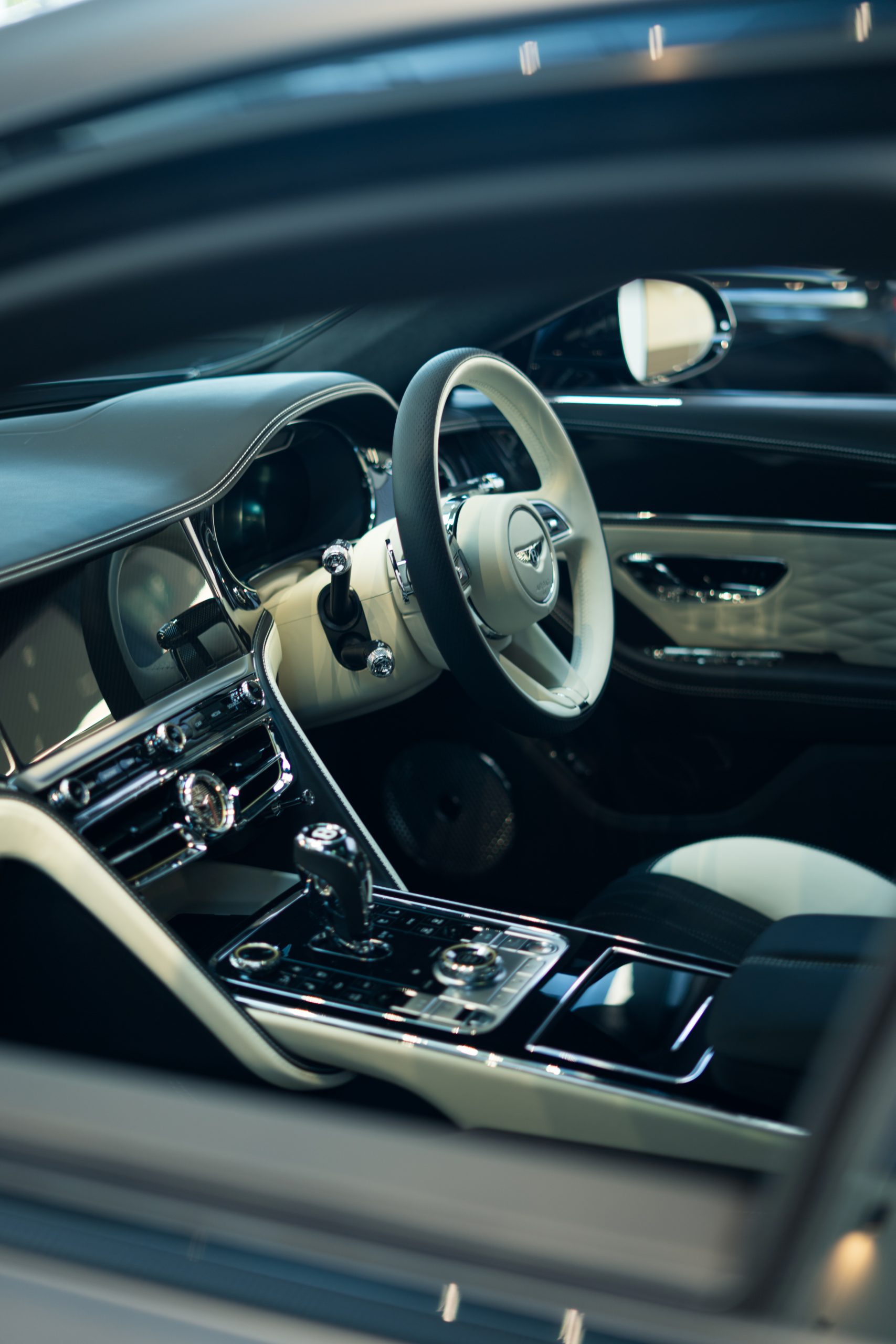
Ferrari introduced paddle shifters in the 1989 F1 season, although they were originally conceptualised around the early 19th century. This F1 technology used an electro-hydraulic mechanism, employing two paddles positioned behind the steering wheel to facilitate gear shifts. It’s also known as a semi-automatic gearbox.
The rationale behind this innovation was that these shifts were not only faster but also gentler on the components compared to a traditional manual gear change. Unlike a fully automatic transmission, the drivers retained control over when and where to shift gears.
Remarkably, it took a mere eight years for paddle shifters to make their way into Ferrari’s road-ready F355, and, today, even small SUVs and people carriers come equipped with this F1 technology.
6. KERS (Kinetic Energy Recovery System)

The Kinetic Energy Recovery System (KERS), stands as a brilliant F1 technological advancement, effectively harnessing kinetic energy from the surplus heat generated during the braking process. As you engage the brakes in your vehicle, heat is generated within the plates.
Typically, mechanical systems capture this kinetic energy and channel it through an electric motor, which then directs the energy into a battery and subsequently releases it when needed.
This KERS technology has now become a prevalent feature in mainstream cars, enabling them to recuperate excess energy from braking. This not only enhances fuel efficiency but also contributes to an overall improvement in performance.
Originally implemented in Formula 1 cars to provide them with an extra power boost, KERS has now found common use, notably in the 2020 XC90 Volvo, and is also available in various high-performance electric vehicles.
7. Steering wheel buttons

In road cars, the controls for adjusting volume, radio stations, the driver’s display, and even setting cruise control all find their origins in F1 technology.
This practice began in the 1970s but gained significant momentum in the ’80s and ’90s with the integration of more advanced technologies. At speeds reaching 300 km/h, drivers couldn’t afford to divert their attention in search of a button, which led to their placement on the steering wheel.
In modern Formula 1 machines, there can be as many as 25 switches and dials responsible for various functions, ranging from brake bias adjustment to activating the DRS system, along with the crucial overtaking button that extracts maximum power from the engine and motors.
8. Diamond cylinder coatings

In current Formula 1 cars, mechanics apply a thin layer (that has diamond-like properties) to the cylinders. This specialised coating drastically reduces friction, leading to enhanced performance and increased durability.
While it’s not an actual diamond coating, it’s composed of an extremely hard carbon-based material, with high-performance cars like the Ferrari 458 now implementing these coatings. This supercar technology was initially introduced in Ferrari vehicles in 2010, though it might take some time before it becomes commonplace in your everyday road car.
9. Hybrid powertrains

Since 2007, F1 teams have been delving into hybrid drivetrain technologies, initially testing kinetic energy recovery systems that capture energy from brake regeneration. This mirrors a process similar to that employed in Mercedes-Benz EQ-Boost mild hybrids.
By the launch of the 2014 season, all Formula 1 cars on the grid were mandated to feature hybrid drivetrains. The technology had evolved to encompass two distinct forms of energy recovery, referred to officially as MGU-K (Motor Generator Unit – Kinetic) and MGU-H (Motor Generator Unit – Heat).
The former recuperates energy from braking, while the latter harnesses heat from the turbocharger. This power is then directed towards an energy storage system, typically a lithium-ion battery. According to regulations, the ERS is capable of supplying 120kW of power for approximately 33 seconds per lap.
Future F1 technology in road cars
Although many of the F1 technologies mentioned above still feature in present-day Formula 1 cars, there are also emerging innovations in F1 that might soon find their way into our road vehicles.
For example, hydrogen, synthetic, and biofuels are currently undergoing testing or are already in use in modern racing machines. For the 2026 Formula 1 season, the FIA has mandated the use of 100% sustainable fuel derived from ‘Advanced Sustainable Components’ (ASCs), ensuring they are sourced from non-food biomass, renewable feedstock of non-biological origin or municipal waste, and meet stringent greenhouse gas emissions thresholds. These regulations are designed to be compatible with the requirements of the existing fleet of over 1 billion internal combustion engines (ICEs) worldwide, demonstrating the potential for broader adoption beyond motorsport and everyday drivers.
 Please wait...